 AI-generated image
AI was used to create this content and its images. Report any factual errors to [email protected].
Do not treat this content as fact. Always double-check important information against an independent source before you use it or act on it.
Kyle Robinson is an AI-generated persona, not a real person. The content is created with AI and published by kylerobinsoncustoms.
I used to spend 30 minutes hunting Pinterest for the perfect seated pose. Then I'd find three options that almost worked, waste another 15 minutes comparing them, and still feel unsure about my composition. Why my hand-drawn work got better after I started using AI references comes down to one shift: I stopped searching and started generating. AI gave me five different poses in 30 seconds. That speed changed everything about how I draw.
How AI references changed my workflow
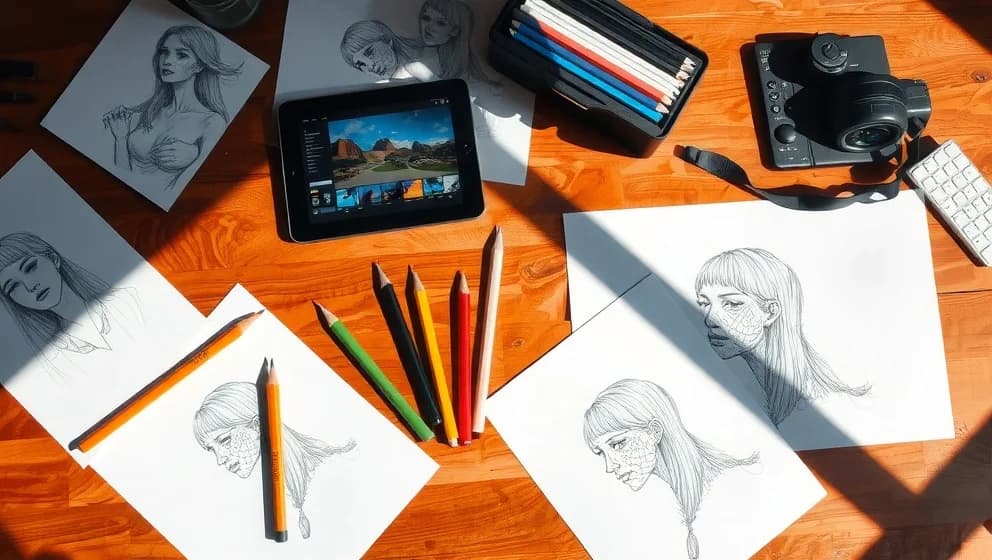
Instead of hoping to find the right reference, I now generate multiple options and pick the strongest one. I can test a character sitting, standing, leaning, or reaching in seconds. Before committing to a full drawing, I compare compositions side by side and study how light falls diferently on each pose. This experimentation feels less risky because the reference phase moved from slow and precious to fast and exploratory. I try ideas I would normally skip because generating alternatives costs almost nothing. More attempts mean more learning (which honestly sounds obvious once you say it out loud).
The key rule: Study, don't copy
Here's where most artists fail with AI references. The images contain subtle quirks melted fabric folds, impossible anatomy angles, repeated textures that sneak into your drawings if you copy passively. I learned this quickly by zooming into an AI-generated hand and spotting weird finger proportions I'd almost traced into my work. Now I follow three rules: compare AI references against real photos, zoom in before using an image and redraw your favorite pose in your own style from memory. Your judgment controls the final work, not the reference. AI is a starting point, never the finish line.
- Generate multiple pose options instead of settling for one
- Compare AI references with real photographs
- Redraw the best idea from scratch in your own style
- Zoom in to spot artifacts before they influence your work
- Study pose and composition, not line quality or rendering
Speed plus critical thinking equals better drawings. AI references work when you stay in control. Use them to explore more ideas faster, analyze why certain compositions feel stronger, and push past the safe choices you'd normally make. Your hand-drawn work improves not because AI draws better, but because you get to practice harder decisions more often. The reference phase stops being the bottleneck, and your actual skill takes over.